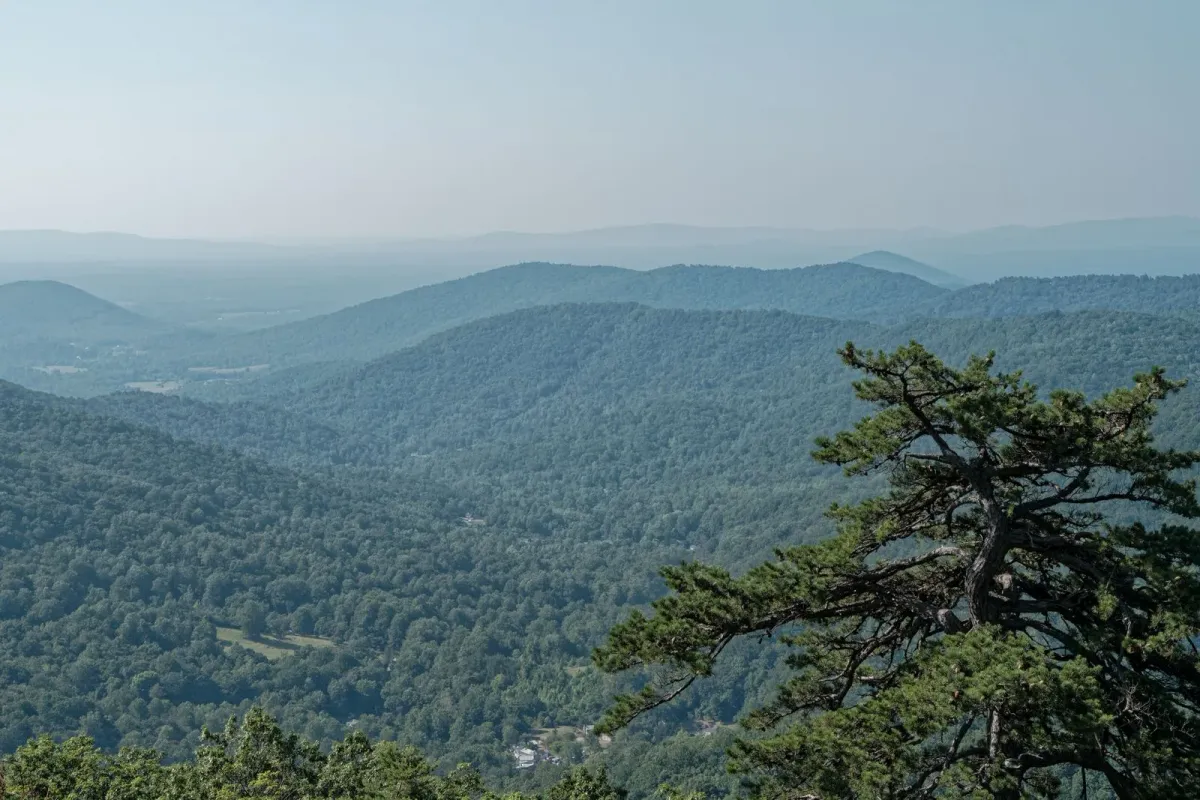
Most people who start looking at Harrisonburg VA real estate begin with the listings: square footage, lot size, how many bathrooms. That’s a fine place to start, but it’s not what makes people stay. What makes people stay is the Friday evening dinner downtown, the fifteen-minute drive to a trailhead, the sun coming up over the Massanutten ridge from your own driveway. Buying here means buying into a place, not just a floor plan.
If you’re considering a move to Harrisonburg or Rockingham County, or you already live here and are thinking about your next home, here’s an honest look at what daily life in the Valley feels like and how that connects to the housing you’ll find.
What sets Harrisonburg VA real estate apart
Harrisonburg sits in the middle of the Shenandoah Valley, with the Blue Ridge to the east and the Allegheny ridges to the west. That geography does two things to the housing market.
First, it keeps the city compact. Harrisonburg proper is a small footprint, which means most addresses in the city are genuinely close to everything: the hospital, the university, the grocery stores, the interstate. You don’t spend your life in traffic here.
Second, it means the character of a property changes fast as you move outward. Drive ten minutes north on Route 42 and you’re in open farmland. Drive fifteen minutes east and you’re climbing toward the mountain. Within a single county you’ll find brick colonials on tree-lined city streets, newer construction on cul-de-sacs, farmhouses on acreage, and townhomes a block or two from a coffee shop. The range is wider than most people expect from a city this size, and it’s the main reason two buyers with the same budget can end up with completely different lives.
Downtown Harrisonburg is the real draw
Downtown Harrisonburg has spent the last two decades turning into something rare for a city its size: a compact downtown core that people actually use at night.
Court Square anchors it, with the old courthouse in the middle and blocks of independent businesses radiating out. The restaurant scene punches well above its weight. On any given evening you can eat Ethiopian, Salvadoran, Vietnamese, or wood-fired Neapolitan pizza within a few blocks of each other (we keep a running list in our guide to the best restaurants in Harrisonburg). The Harrisonburg Farmers Market runs downtown through the growing season, and Court Square Theater keeps a steady calendar of films and live music.
For buyers, this matters practically. Homes in the older neighborhoods just off downtown, including Old Town and the streets around Purcell Park and north of Court Square, tend to be early- to mid-20th-century construction with front porches, mature trees, and sidewalks. They’re smaller than what you’d get for the same money farther out, and many need updating. But dinner is a few blocks away. That trade-off is the central question a lot of Valley buyers end up wrestling with.
The outdoors starts fifteen minutes from your door
This is the part that’s hard to convey in a listing photo. Harrisonburg is surrounded on all sides by public land and open space.
Shenandoah National Park and Skyline Drive are roughly a 40-minute drive east. The George Washington National Forest is closer still, with trailheads west of town that most locals can reach in under half an hour. Reddish Knob, one of the best sunset views in the state, is about an hour out and worth every minute of the drive. Massanutten Resort, with skiing in winter and a water park and bike trails the rest of the year, is about 20 minutes from downtown. Our trail guide covers the best of it.
Inside the city you don’t have to go far either. Hillandale Park and Purcell Park both offer real trail systems, not just playgrounds. The Edith J. Carrier Arboretum on the James Madison University campus is free, open year-round, and one of the most peaceful 125 acres in the Valley. The city has also invested steadily in bike infrastructure and has been recognized as a bicycle-friendly community.
If getting outside easily is a priority, that should shape where you look. Properties along the eastern edge of the county put you closer to the Blue Ridge. The western side of Rockingham County gets you into the national forest faster.
Neighborhood character across the city and county
A few broad strokes, keeping in mind that every street is its own thing:
Northeast and downtown-adjacent. Older housing stock, established trees, closest to downtown and the hospital corridor.
Southeast toward Port Republic Road. A mix of established subdivisions and newer development, convenient to JMU and the shopping along East Market Street.
The east side and the southern edge. Planned neighborhoods such as Crossroads Farm on the east side, and the Pleasant Valley area south of the city line, with a mix of build eras and generally larger lots than the city core.
Rockingham County proper. Bridgewater, Broadway, Timberville, Dayton, Elkton, and Mount Crawford each have their own small downtowns and their own feel. Prices per square foot typically run below the city, and acreage becomes realistic. The trade is a longer commute and, in some areas, well and septic instead of city utilities.
The county is also where you’ll find most of the working farmland and larger parcels, which matters if you’re thinking about horses, a workshop, or just distance from the nearest streetlight.
A year in the Valley
Seasons here are distinct and they’re a genuine part of the appeal. Spring brings the orchards into bloom and the farmers market back to full strength. Summer is warm but rarely brutal, with evening thunderstorms rolling over the ridges. Fall is the headline act: the foliage draws visitors from three states, and the Valley calendar fills with festivals and harvest events. Winter is mild by mountain standards, with occasional real snow and skiing 20 minutes away when it comes.
It’s also worth knowing that Harrisonburg’s rhythm follows the university year. Late August and early May are busy; July slows down. That seasonality shows up in the housing market too, which is worth talking through before you set a timeline.
Thinking about a move to the Valley?
The right home in Harrisonburg depends less on a checklist and more on how you actually want to spend a Saturday. Someone who wants a bakery around the corner and someone who wants a view and a workshop are shopping in two different markets, even if their budgets are identical.
That’s the conversation the Valley Homes Team likes to have first. We live here, we know these neighborhoods street by street, and we’d rather help you find the right fit than the fastest one. If you’re starting to look at Harrisonburg VA real estate, whether you’re moving across the country or across town, reach out. We’re happy to talk through what the Valley looks like from where you’re standing.