Most people think about a house as a place to live first and an investment second. That’s fair. It’s your address, your kitchen, your driveway to shovel. But if you’ve watched Harrisonburg VA real estate for any length of time, you’ve probably noticed something: the people in the Valley who quietly built real financial security usually did it one property at a time, without ever flipping a house on television.
I’ve written about the general idea before. This time I want to do something more useful and walk through a real property with real numbers, because “rentals build wealth” is easy to say and hard to picture. The example is one of my own listings, and I’ll be upfront about that: I represent the seller, so read the numbers as a worked example, not as a pitch.
Why Harrisonburg holds its value
The short answer is that our local economy doesn’t swing as hard as a lot of markets do. Harrisonburg sits on employers that stay put: James Madison University, Eastern Mennonite University, Sentara RMH, the poultry and food-processing sector, the public school systems, and steady manufacturing along the I-81 corridor. Markets built on one volatile industry spike and crater with it. Markets built on education, healthcare, agriculture, and logistics tend to grind upward instead.
The numbers this year fit that pattern. In my September market report, sales and contracts were cooling and inventory was creeping up, yet detached and resale prices were still up about 2% and well-priced homes were going under contract in about a week. That’s a market leveling off, not falling. For an investor, flat-to-modest appreciation is not a disappointment. It’s the boring, reliable base layer that makes everything else work.
The four ways a property pays you
When people evaluate a rental they usually look at one number: does the rent cover the mortgage? That matters, but it’s a quarter of the picture. A property pays you four ways at the same time.
Cash flow. Rent minus mortgage, taxes, insurance, fees, maintenance, and vacancy. In Harrisonburg this is often modest on day one. That’s normal here. Our rent-to-price ratios are healthier than Northern Virginia and tighter than deep rural markets.
Principal paydown. Every month, part of the payment reduces what you owe. Someone else’s rent is retiring your loan balance whether or not you ever look at the statement.
Appreciation. At a conservative 3% a year, a $250,000 property gains about $7,500 in value in year one. Because you put down far less than $250,000, the return on your invested dollars is considerably higher than 3%.
Tax treatment. Depreciation, mortgage interest, and operating expenses all get favorable treatment on rental property. I’m not a CPA and this isn’t tax advice, but this is the piece first-time investors underestimate most, and it’s worth a conversation with an accountant before you buy rather than after.
Add those four together and a property that “only” breaks even on cash flow can be quietly producing a double-digit total return.
A real example: 1319 Bradley Dr
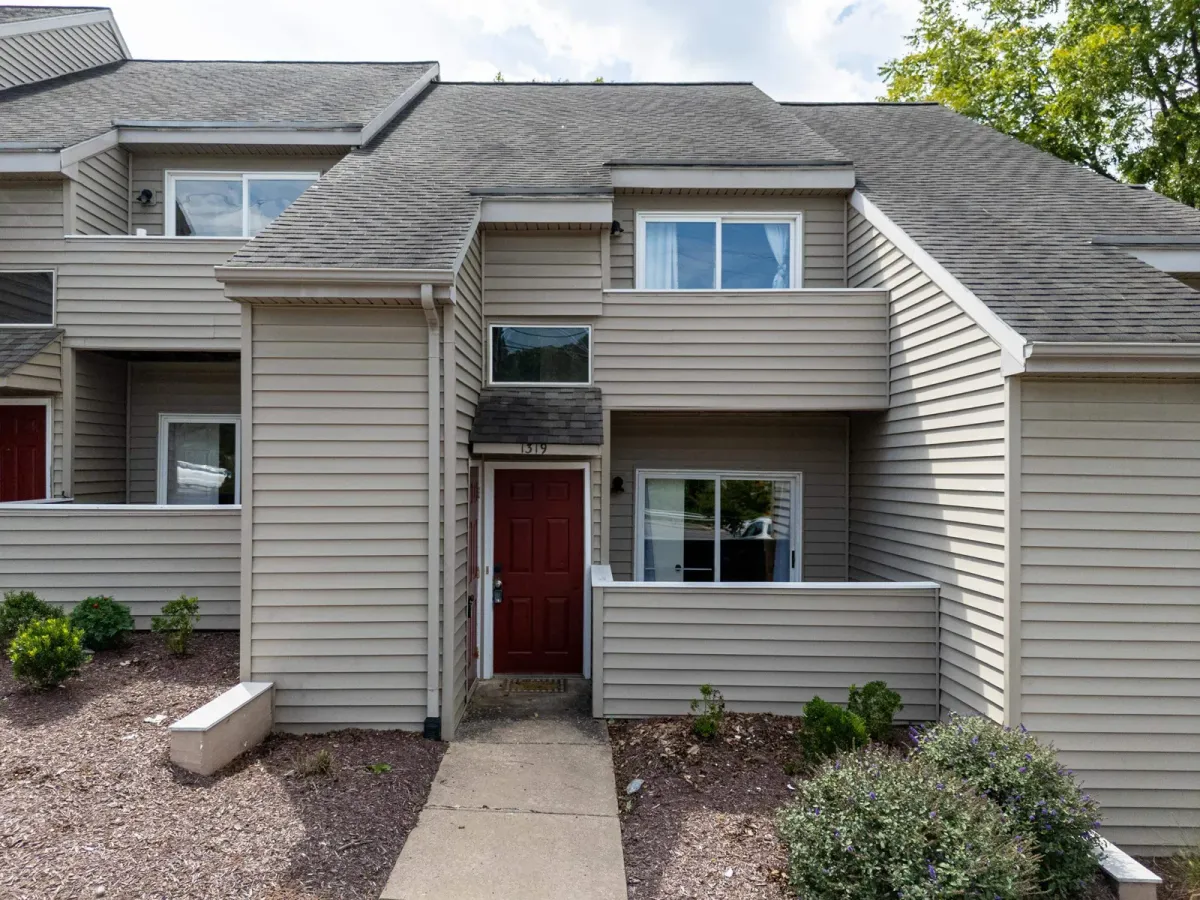
Here’s what a Valley rental actually looks like on paper. 1319 Bradley Dr is a four-bedroom, two-bath townhouse in Camden Townes, one of the closest communities to the JMU campus, listed at $249,900.
- Price: $249,900
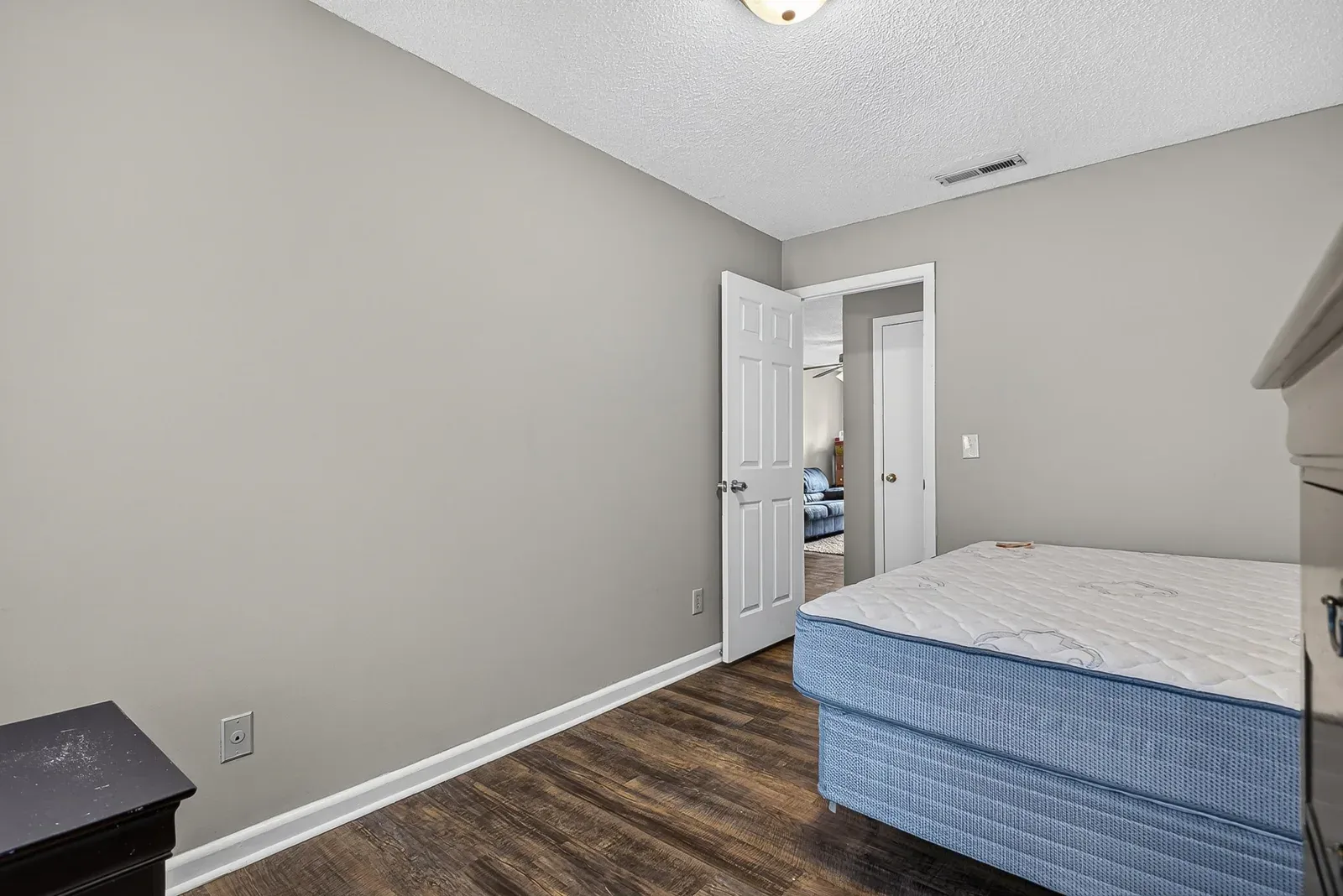
- Size: 4 bedrooms, 2 full baths, 1,352 square feet, built in 1989
- How it’s leased: by the bedroom at $525 per room, which is $2,100 a month at full occupancy. Leases run through July 31, 2027, and one room is currently available
- What the owner covers: electric up to $150 and water up to $75 a month, plus the $175 monthly POA fee, which pays for landscaping, exterior maintenance, snow removal, trash service, and professional management
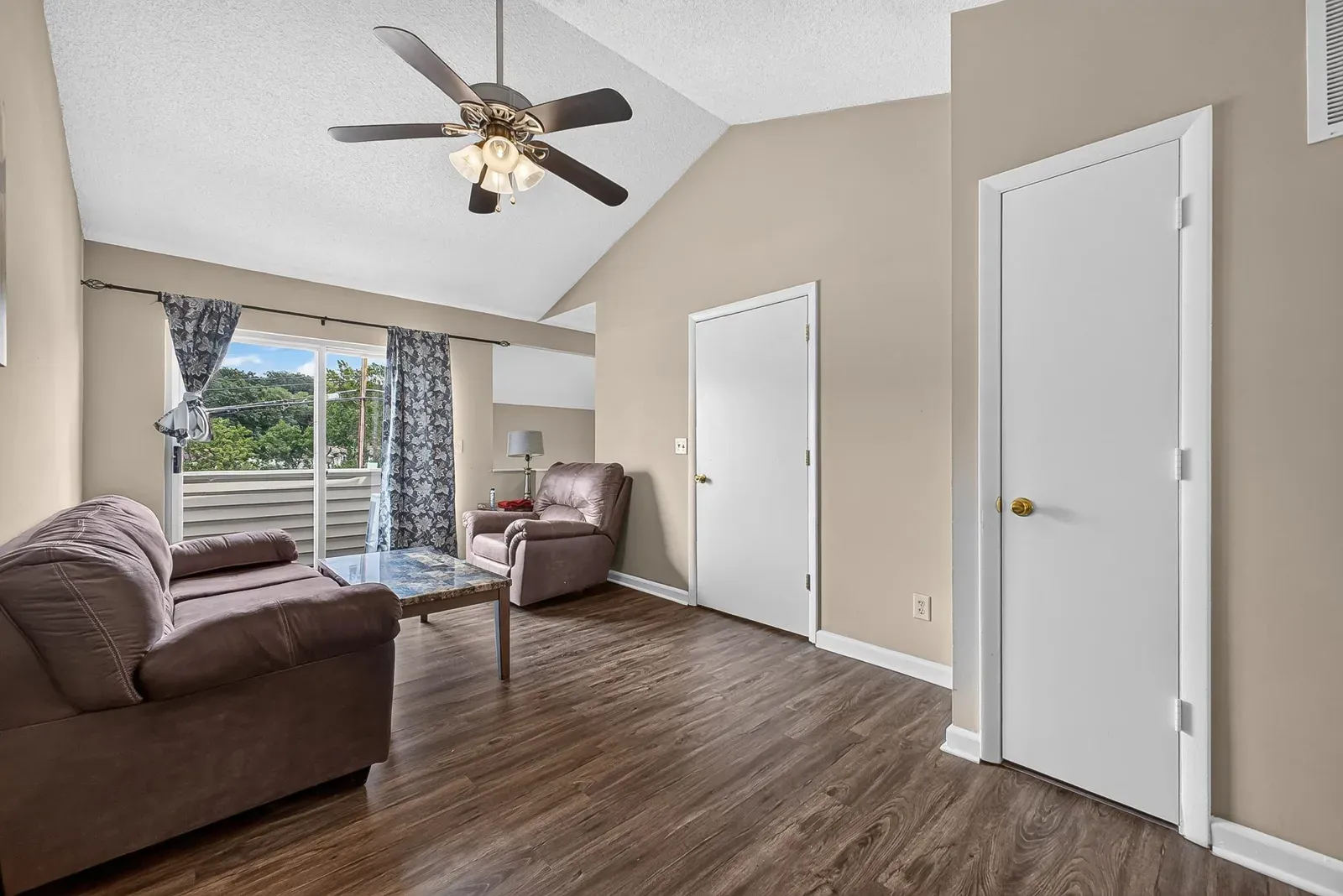
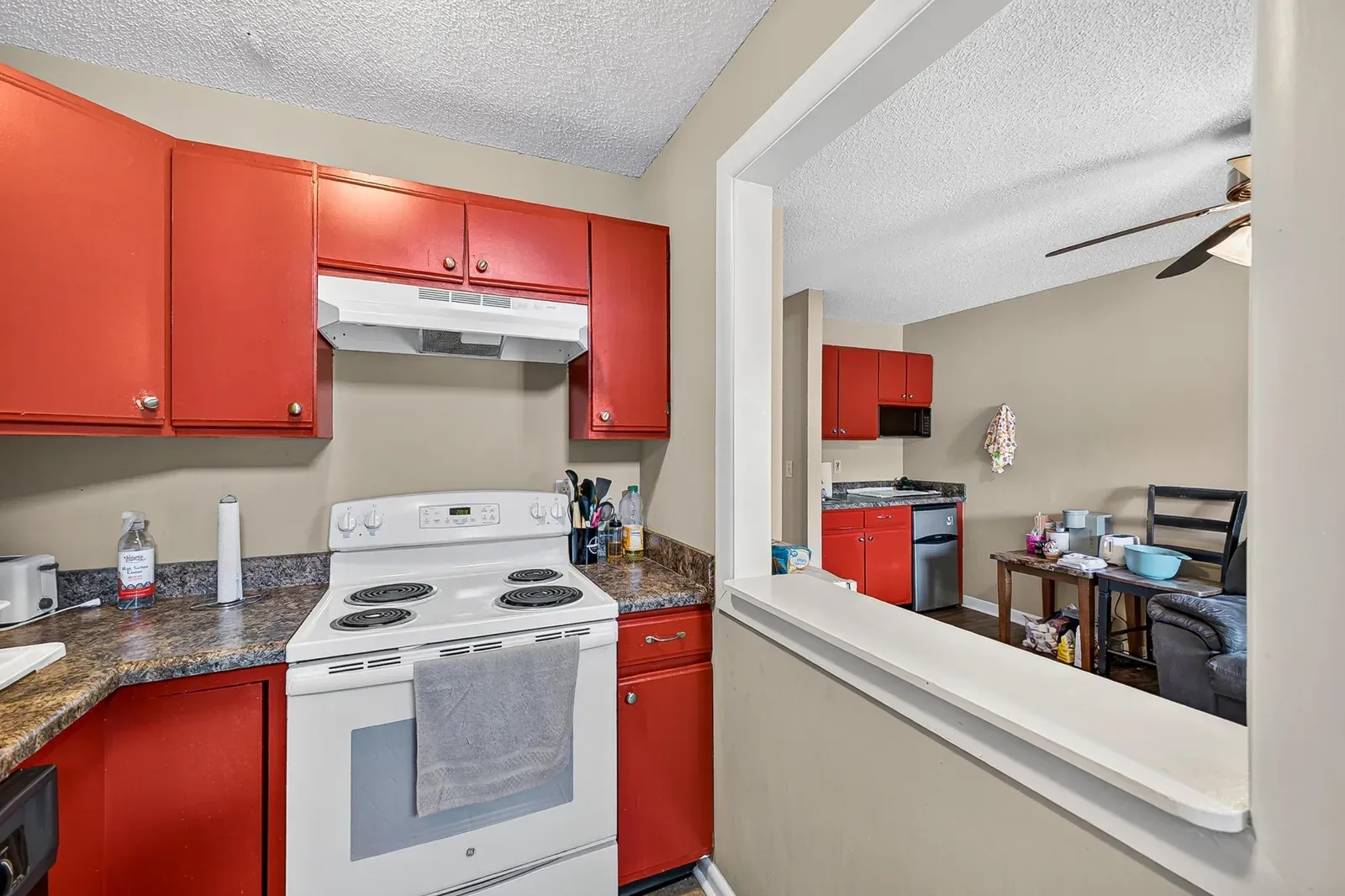
- Layout: each level has its own living area, mini kitchen, two bedrooms, a full bath, and its own outdoor space (a covered patio below, a balcony with a storage closet above). The full kitchen is on the first floor and the washer and dryer sit at the top of the stairs
- Finishes: luxury vinyl plank throughout, tile in the kitchen, heat pump with central air, vaulted ceiling over the upper family room
- Also: management conveys with the existing leases, so a buyer is not starting from zero
Now the arithmetic. At full occupancy the unit grosses $25,200 a year. Against a $249,900 price, that’s a gross yield right around 10%, or about 0.84% of the purchase price per month. Investors who use the old “1% rule” will notice this lands a little under it, which is typical for Harrisonburg. What the rule misses is that this unit already has leases in place, professional management in place, and a POA that handles the exterior, so a lot of the work that usually eats an owner’s weekends is already someone else’s job.
That gross number is where your own homework starts, not where it ends. Before you’d write an offer here you’d subtract the POA fee ($2,100 a year), the owner-paid utility caps, City of Harrisonburg real estate taxes, insurance, a vacancy allowance, and a maintenance reserve, then put your actual financing on top. I can run that full sheet with you on this unit or any other.
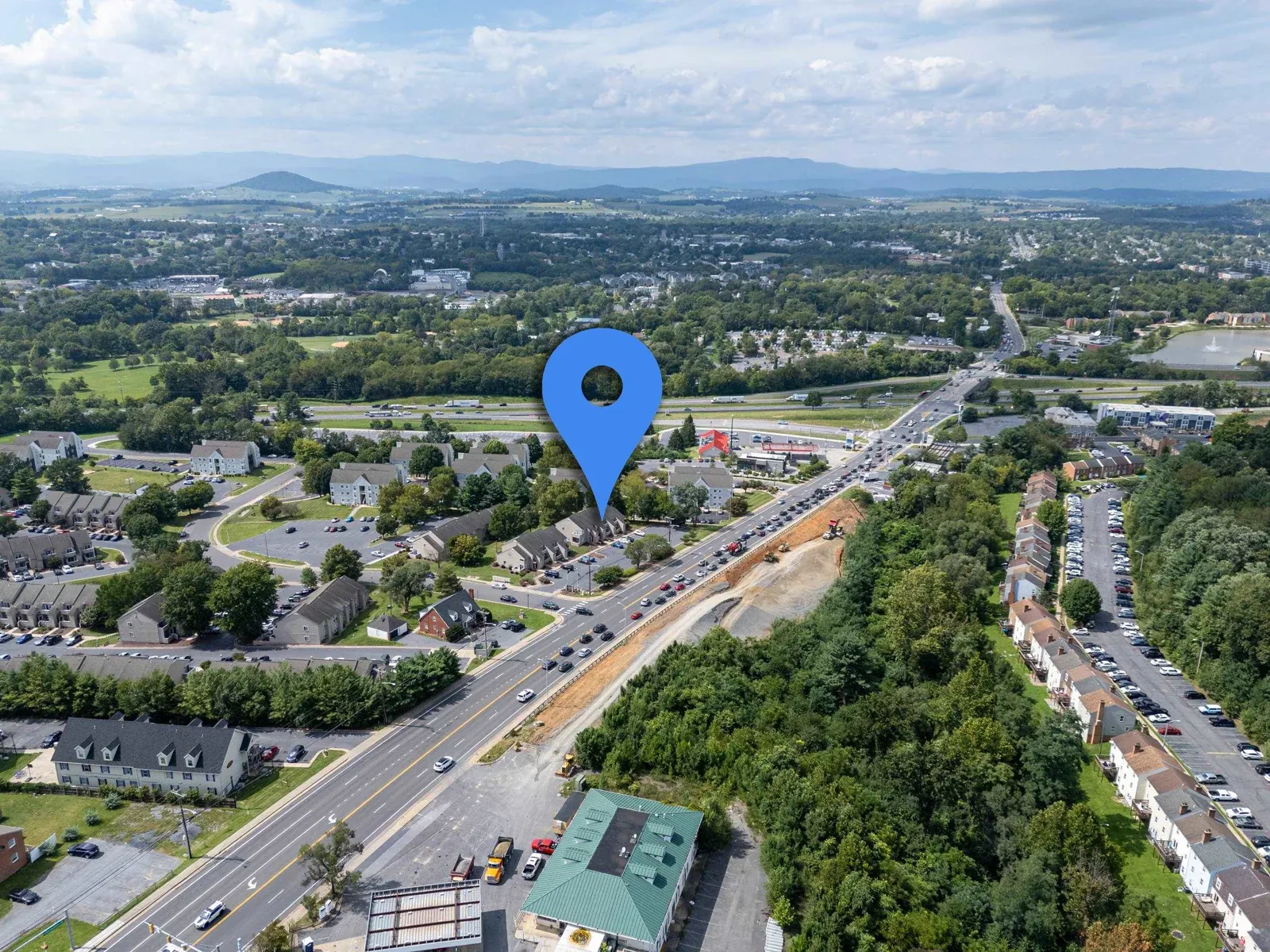
The location, marked, with the JMU side of town beyond it.
See the full listing, all 62 photos, and the floor plans
Listed by Mattias Clymer, The Valley Homes Team, Funkhouser Real Estate Group.
What to look for in a Valley rental
Bradley Drive illustrates the criteria that matter when you shop with an investment lens instead of a homeowner’s lens.
Location relative to demand drivers. Proximity to the universities, downtown, Sentara RMH, and the I-81 interchanges keeps a unit occupied. Vacancy is the single biggest destroyer of returns. One empty month costs more than a year of small repairs.
Boring, durable construction. Vinyl siding, a straightforward floor plan, a heat pump that’s been serviced, and hard flooring instead of carpet will outperform a charming property that needs constant attention. Character is great in a home you live in. In a rental it’s an expense line.
City versus county. Tax rates, zoning, and short-term rental rules differ between the City of Harrisonburg and Rockingham County, and the city’s rental rules in particular are worth reading before you write an offer. This is where a local read saves real money.
Realistic expense assumptions. Budget for vacancy, capital expenditures, and management even if you plan to self-manage. A pro forma that assumes twelve months of rent and no repairs isn’t a plan. It’s a wish.
Starting smaller than you think
Not everyone’s first step is a separate rental. Some of the most effective wealth-building moves in the Valley are less dramatic:
- House hacking. Buy a property with a finished basement, a legal accessory unit, or a duplex configuration, live in one part, and rent the other. Owner-occupant financing typically means a far smaller down payment than an investment loan.
- Keeping the first house. When you move up, run the numbers on keeping your current home as a rental instead of automatically selling. You already know its condition, and you may hold a favorable interest rate on it.
- Buying the home you’ll grow into. A property with unfinished space or an addition-friendly lot lets you build equity through improvement rather than waiting on the market.
Each of these gets you a second property without a second down payment, which is usually the real bottleneck.
Run your own numbers first
Not every property in this market works as an investment, and the ones that do aren’t always the ones that look best in photos. A deal that pencils in one part of the county might not clear two miles away. The only way to know is to run the actual figures on the actual property: purchase price, realistic rent, the real tax bill, a real insurance quote, a real maintenance reserve.
That’s the work. It isn’t glamorous, and it’s why the people who do it consistently end up owning several properties while everyone else is still reading articles about it.
If you’re weighing a first rental, wondering whether to keep your current home when you move, or want a straight answer on what a specific Harrisonburg property would realistically rent for, I’m happy to sit down and run the numbers with you. No pressure to buy anything. I’d rather help you pass on a bad deal than talk you into one.