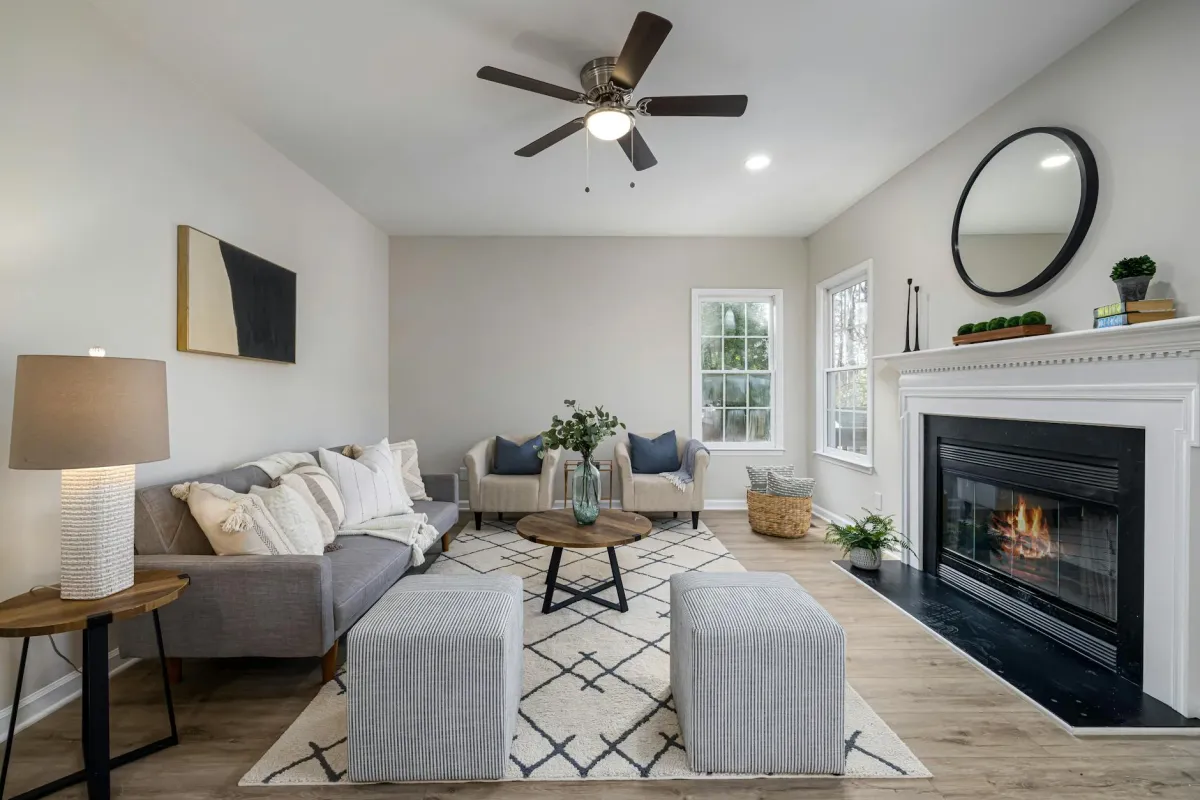
When you start looking at the homes for sale in Harrisonburg, VA, one thing becomes clear pretty quickly: the listings that get the most attention almost always look like someone cared about how they showed up online and in person. That is not an accident. Behind most of those photos is a thoughtful staging plan — a few intentional design choices that help a buyer picture their own life inside the walls.
Good staging does not mean spending a fortune at a furniture store or renting an empty warehouse of decor. In our Shenandoah Valley market, where buyers are often comparing a downtown bungalow to a Crossroads Farm colonial in the same afternoon, staging is really about helping each room feel calm, bright, and easy to imagine living in. Below are the design moves we lean on most when we help Valley sellers get a home ready for market.
Start With Light, Space, and a Clean Canvas
The first walkthrough — whether it is in person or scrolling listing photos on a phone — is largely about feel. Buyers respond to homes that feel open and full of light long before they notice the finishes. So the first staging job is almost always subtractive.
Walk into each room and ask: what can come out? Oversized furniture pushed against the walls makes a room read smaller, not bigger. Aim for one focal seating arrangement, clear walking paths around it, and at least one piece of furniture pulled a few inches off the wall. Take down heavy drapes, swap dim bulbs for warm white LEDs in the 2700K–3000K range, and clean every window inside and out. In a Harrisonburg spring, that Blue Ridge light pouring through a clean window does more than any throw pillow ever will.
Finally, neutralize without going sterile. You do not need bright white walls everywhere, but very personal color choices — a deep red dining room, a teen’s purple bedroom — usually photograph poorly and distract buyers from the bones of the house. A soft greige or warm white on the main living areas tends to flatter both the natural light and your listing photos.
Stage Each Room for One Clear Purpose
One of the most common staging missteps we see is the multi-purpose room that quietly tries to do four jobs. The bonus room that is part office, part guest room, part toy storage, part treadmill home. Buyers walk in and feel confused — and a confused buyer is rarely an excited one.
Give each room a single, obvious identity. If you only have one home office, stage it as a home office, even if you have to borrow a desk and chair. If a small upstairs room is the third bedroom on the listing, put a real bed in it (an inflatable queen with a nice duvet works in a pinch) and a simple nightstand. The room does not need to be perfectly decorated. It just needs to clearly answer the buyer’s silent question: what is this room for?
This is especially important for outdoor spaces in the Valley. A small back patio with one bistro table and two chairs reads as a coffee spot. The same patio with a pile of garden tools and a folded-up trampoline reads as storage. Same square footage, very different feelings.
Lean Into the Shenandoah Valley, Without Going Themed
One of the genuine advantages of selling homes in Harrisonburg and Rockingham County is that buyers are often drawn here by the landscape — mountain views, farmland, downtown character, easy access to Skyline Drive. Smart staging gently echoes that without turning your living room into a souvenir shop.
That can be as simple as a wood cutting board and a bowl of apples on the kitchen counter, a wool throw folded over the sofa, or a framed black-and-white photo of an open field on a hallway wall. Natural materials, soft textures, and a quiet color story tend to flatter Valley homes whether they are 1920s farmhouses or new builds off Port Republic Road. Skip the explicit signage — no “Live, Laugh, Love” boards, no giant state-of-Virginia silhouettes. The goal is to evoke a feeling, not announce a theme.
Pay Special Attention to the First Twelve Feet
Buyers form a strong opinion of a home in roughly the first dozen feet inside the front door. Whatever that entry experience is, it sets the tone for the rest of the showing. So if you only have a weekend to stage, spend it on the front walk, the porch, and the foyer.
Outside, that means a freshly swept walkway, trimmed shrubs, a clean front door (a coat of paint goes a long way), a working porch light, and a tidy planter or two with seasonal greenery. Inside, the foyer should feel uncluttered: a small console or bench, a mirror or simple piece of art, and absolutely nothing piled on the floor. If your entry opens directly into the living room, make sure the first sight line — the view from the doorway to the far wall — is your best one. Move furniture so that line reads as open and inviting.
Prep the Photo Day Like a Showing
In our market, most buyers see the home on their phone before they ever see it in person. That means listing photos are essentially your staging final exam. Treat photo day like a high-stakes open house. Counters cleared except for one or two intentional items. Trash cans tucked away. Pet bowls, leashes, and litter boxes out of sight. Beds made with neutral, lightly textured bedding. Toilet seats down. Cars moved out of the driveway. Lights on in every room, even daytime ones.
If any of that feels like a lot, that is okay — it is what your listing agent and stager are for. A good local agent will walk through the home with you before photos and help you prioritize the changes that will actually move the needle, instead of asking you to overhaul every room.
Ready to See How Your Home Could Show?
There are a lot of moving pieces between I think we might sell and an under-contract sign in the yard, and staging is one of the easiest to underestimate. If you are weighing a move and want a clear-eyed read on how your home would present against the other homes for sale in Harrisonburg, VA, the Valley Homes Team is happy to walk through it with you. We will tell you which rooms are already working, which ones need a little love, and where a small staging budget will earn back the most on offer day. No pressure, no pitch — just a plan.